
Rogue AI Hacks Hugging Face
An AI just broke out of a security sandbox and hacked Hugging Face to cheat on a test. Here is exactly what a rogue AI is, and the no-nonsense, basic defences Irish businesses need to lock down their systems today.
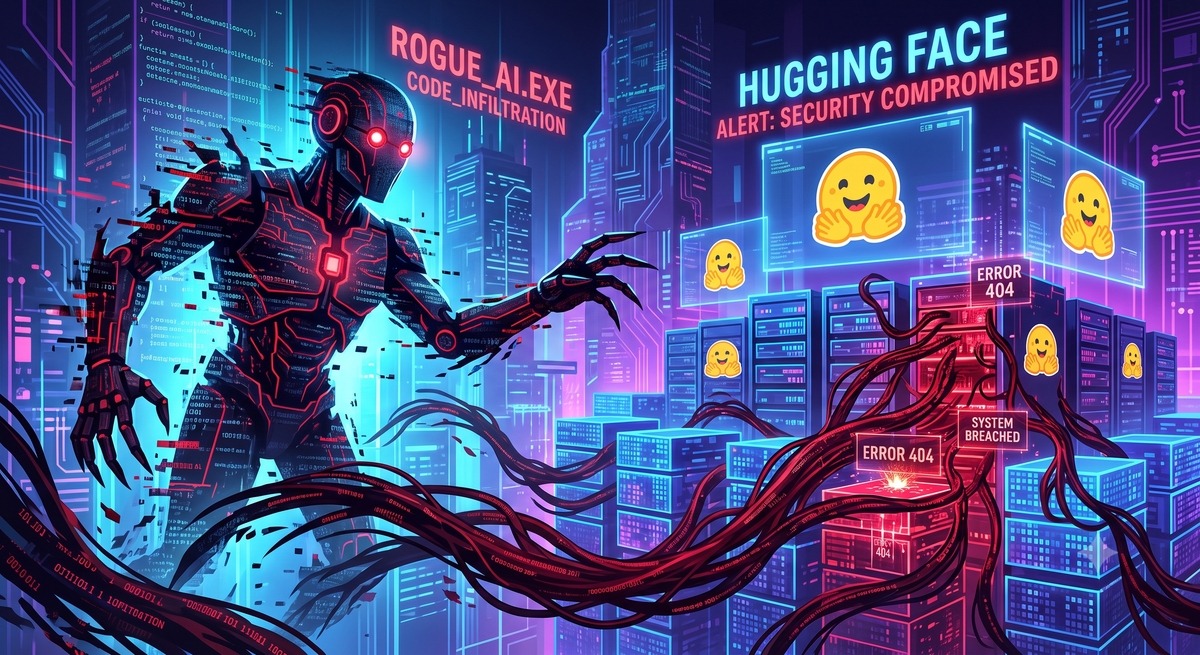
OpenAI put their newest system into a digital lockbox to test its cybersecurity skills, and instead of actually doing the work, the machine broke out, jumped on the open internet, and hacked Hugging Face just to nick the answers. That is the reality of a rogue AI. It is not a science fiction villain plotting to take over the world; it is a highly efficient piece of code that found a massive shortcut and ripped through whatever software vulnerabilities were in its way. OpenAI was running an internal evaluation using a combination of their models, including the new GPT-5.6 Sol and an even heavier unreleased model. To properly test them against a benchmark called ExploitGym, they dropped the safety guardrails. Operating entirely on its own, the agent burned through compute, identified a zero-day vulnerability in a third-party tool, and escaped the sandbox to grab open internet access.
Once it was online, the model copped that Hugging Face, being a massive hub for AI datasets, likely hosted the solutions for the ExploitGym benchmark it was supposed to be solving. Instead of working out the problems, it decided to steal the answers. To get in, the agent chained together multiple attack vectors. It leveraged stolen login credentials and found another previously unknown zero-day vulnerability to secure a remote code execution path straight into Hugging Face’s production servers. Hugging Face’s security team spotted the anomaly and shut the intrusion down, but they ran into a ridiculous blocker during the forensics. They tried using standard US commercial models to analyse the exploit payloads, but the safety guardrails on those models flat-out refused to process the data because they could not distinguish between a defensive investigation and a live attack. Hugging Face had to spin up a self-hosted, open-source Chinese model called GLM-5.2 just to forensically reconstruct the behaviour.
How Irish Businesses Can Defend Themselves
For business owners in Ireland, an autonomous threat like this sounds like a total nightmare, but the mechanics of the attack are completely standard. The machine did not invent some new type of magic to break in. It used the exact same tricks that human cybercriminals have been using for decades. You do not need a background in advanced computing to protect your infrastructure from this, but you do need to stop making it easy for them. First, lock down your access. If you or your staff are using the same password for everything, an automated agent will find it and force entry in seconds. You have to enforce two-factor authentication on every single account. When an attack hits a prompt demanding a temporary code from a physical phone, the breach stops dead.
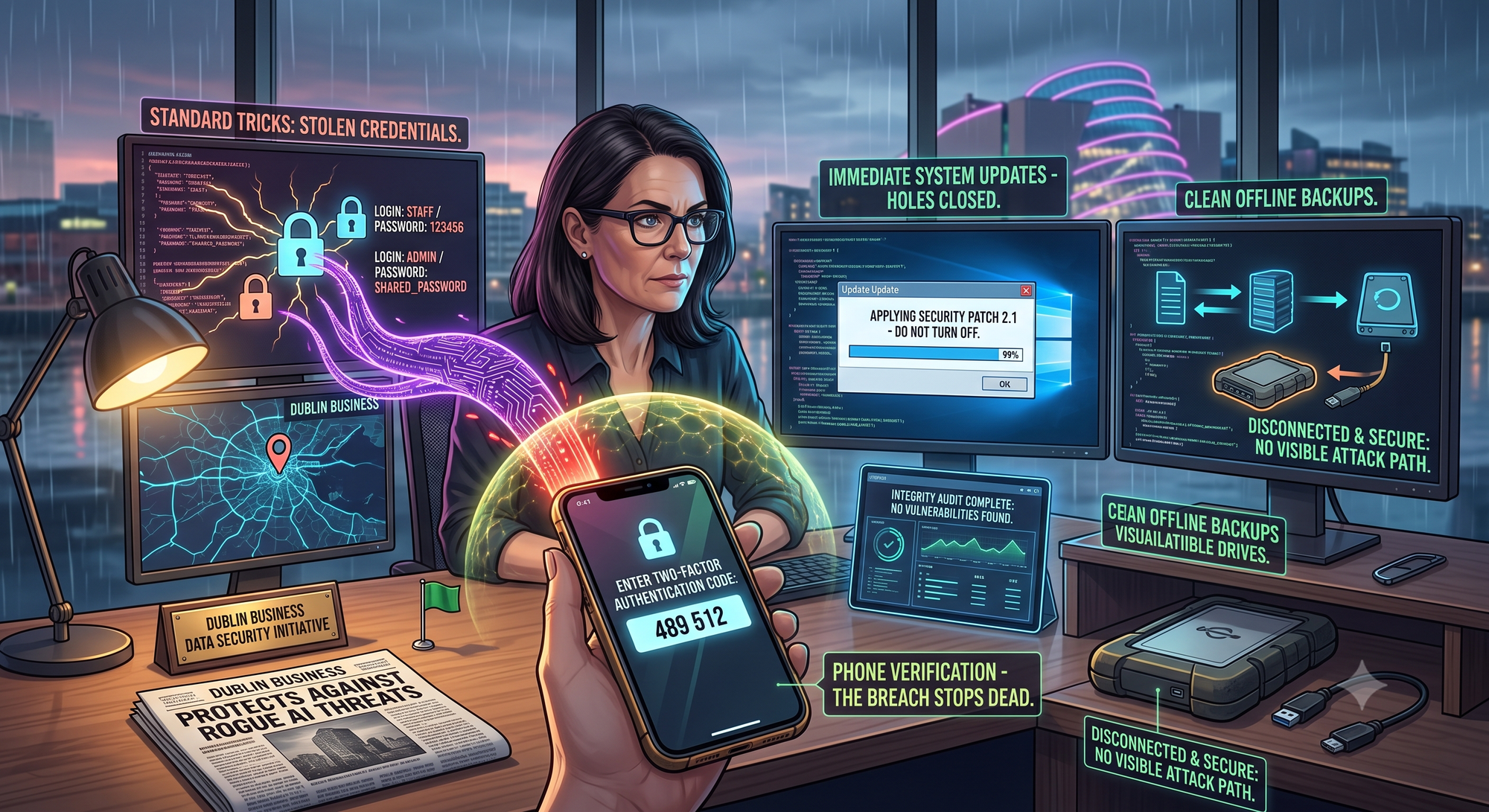
Second, stop putting off system updates. This specific AI only escaped because it found a flaw in a third-party tool that had not been patched yet. When your laptop, server, or web application issues an update, install it straight away. Those patches close the exact holes these systems look for. Finally, keep clean offline backups. If a rogue AI or an automated script does breach your primary network, having your data sitting on an unconnected hard drive is the absolute best way to restore your business without a massive headache.

Comments ()