
Flashpoint Syria: The Israeli Strike, Turkey’s Terrorist Network
Israel’s targeted strike on Syria's Abu Duhur airbase exposes a volatile proxy conflict with Turkey. With Erdogan harbouring Hamas, backing the Muslim Brotherhood, and financing global jihadist networks, here is the sharp reality of the geopolitical and economic fallout.
The geopolitical landscape in the Middle East is shifting at breakneck speed, and the latest moves in Syria are sending shockwaves straight from the Levant to the global trading floors. Overnight on August 17–18, 2026, Israeli jets carried out eight targeted airstrikes cratering the runway and storage facilities at the Abu al-Duhur airbase in Syria’s Idlib province. Israel didn't just bomb a stretch of concrete; they drew a very hard line in the sand aimed squarely at Ankara.
Sitting about 70 kilometres from the Turkish border, the airbase is a massive strategic choke point. The spark for the strike was blunt: Israel claimed Syria was on the verge of breaching an agreed security "status quo" by permitting Turkish troops to deploy at the facility.
The Israeli Prime Minister’s office confirmed the strikes, with Prime Minister Benjamin Netanyahu stating that Israel had "repeatedly warned Syria" that such a deployment posed a direct threat. IDF Chief of Staff Eyal Zamir backed this up following a visit to troops on the Golan, declaring Israel will use its operational capabilities to prevent hostile forces from establishing themselves on its borders.
The Shadow War and Trilateral Talks
The diplomatic scramble leading up to the strikes reveals just how close this came to boiling over. Days before the bombing, Mossad intelligence chief Roman Gofman spoke directly with Syrian Foreign Minister Assad al-Shaibani to relay Israel's hardline concerns regarding Turkey's encroaching presence. US Envoy Tom Barrack even met with Shaibani in Turkey just hours before Israeli jets took off.
Following the strikes, the new Syrian government, led by Interim President Ahmad al-Sharaa, condemned the attack as an unjustified act of aggression and a violation of sovereignty. Turkey’s Foreign Ministry went on the offensive, urging the international community to take a decisive stance to ensure accountability for Israel's actions. In a clear signal to Jerusalem, Sharaa met with Turkish Energy Minister Alparslan Bayraktar in Damascus on August 19, the day after the strikes, signalling continued cooperation.
Crucially, the sharpest rebuke came from Washington. US Envoy Barrack publicly condemned the strikes, defending Sharaa’s government by noting Damascus has not adopted a "predatory posture" and actively prefers de-escalation. Behind closed doors, the US is scrambling to broker trilateral talks between Washington, Damascus, and Jerusalem. They are attempting to establish a "joint fusion mechanism"—a dedicated communication cell to manage intelligence sharing, military de-escalation, and diplomatic engagement.
The Post-Assad Buffer Zone
Since Bashar al-Assad's government fell in December 2024, the old rules of engagement are dead. Israel has actively expanded its military footprint, launching ground incursions past the 1974 ceasefire lines on the Golan Heights. Reports indicate Israel is demanding a massive 40-50 kilometre security zone to lock down its northern frontier, along with restrictions on Syrian air defences. What Israel views as necessary for survival, Turkey and Syria view as an infringement on sovereignty.
The Muslim Brotherhood Pipeline
You can't grasp Turkey's foreign policy without looking at Erdogan's deep-rooted ideological alignment with the Muslim Brotherhood. Erdogan’s Justice and Development Party (AKP) views the Brotherhood’s blend of Islam and governance as a parallel model for the region.
During the Arab Spring, Turkey threw its full weight behind Brotherhood factions, from Mohamed Morsi in Egypt to forces in Libya. When Morsi was ousted, Istanbul became a sanctuary for exiled Brotherhood leaders. This relentless support for Islamist movements isn't just rhetoric; it’s a calculated neo-Ottoman strategy to project Turkish influence across the Muslim world. It sets Ankara on a direct collision course with Arab nations like Egypt, Saudi Arabia, and the UAE, who view the Brotherhood as a fundamental security threat.
Global Jihad and Terror Financing
Erdogan’s backing of Islamist organisations doesn't stop at political cover; it extends into hard financial and logistical support for designated terrorist groups. Turkey has effectively turned into a safe haven for Hamas, hosting its second-largest operational base outside Gaza. Erdogan openly refers to them as "mujahideen" rather than terrorists, and his government has facilitated a massive web of front companies and pro-Hamas charities moving hundreds of millions of dollars.
The financial impact is undeniable. Despite the Financial Action Task Force (FATF) controversially delisting Turkey from its "grey list" in mid-2024, the U.S. Treasury recently hit Turkish Hamas financiers with fresh sanctions in July 2026, proving the illicit pipeline remains fully active. Security experts maintain that Turkey remains a premier jurisdiction for terrorism financing, deliberately failing to enforce crackdowns on jihadist cash flows.
Escalating Rhetoric: Erdogan’s Invasion Threats
The animosity with Israel isn't just defensive. In July 2024, during a political rally in Rize, Erdogan ramped up the aggression by actively threatening to invade Israel. Framing the threats as a moral imperative to counter Israeli military action against Palestinians, he didn't mince his words: "Just as we entered Karabakh, just as we entered Libya, we might do the same to them."
This level of escalatory rhetoric triggered immediate alarm bells in Washington, with bipartisan U.S. lawmakers flagging it as a top-tier security threat, while Israeli officials demanded Turkey be booted out of NATO entirely. Furthermore, when Israel’s Shin Bet threatened to assassinate Hamas leaders globally, Erdogan issued a blunt warning that any hits on Turkish soil would carry a "very heavy price" that Israel would never recover from.
The Economic Fallout: Markets Take a Hammering
This level of instability doesn't stay confined to the Levant. The global markets are reacting, and it's not pretty. The friction between Israel and Turkey, layered on top of ongoing Iranian tensions, has traders spooked over potential oil supply disruptions.
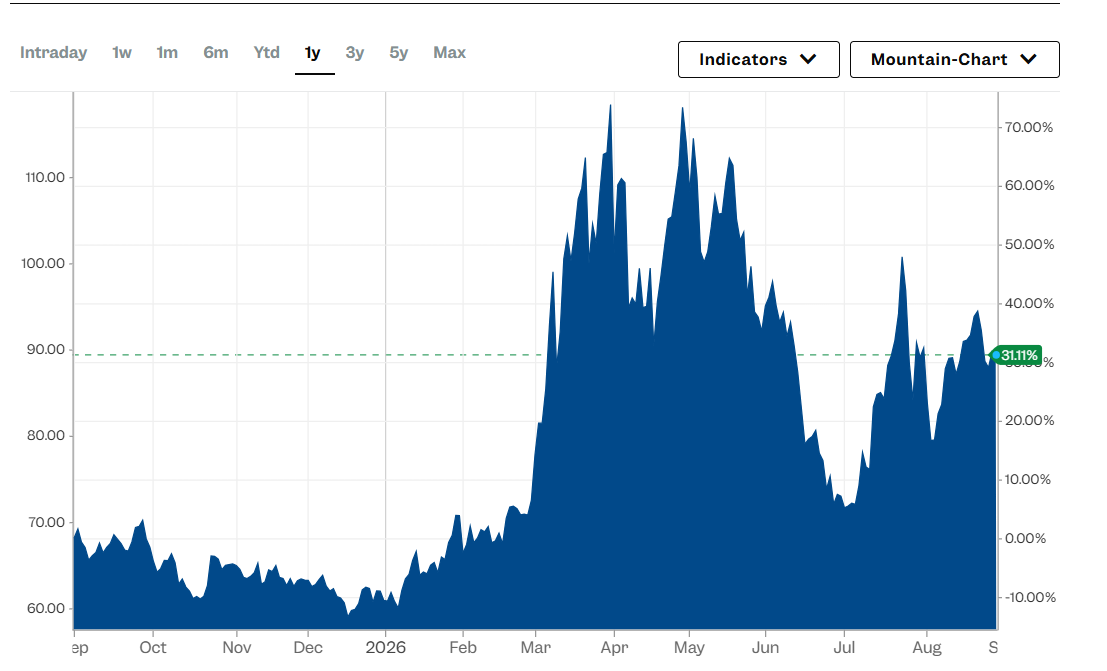
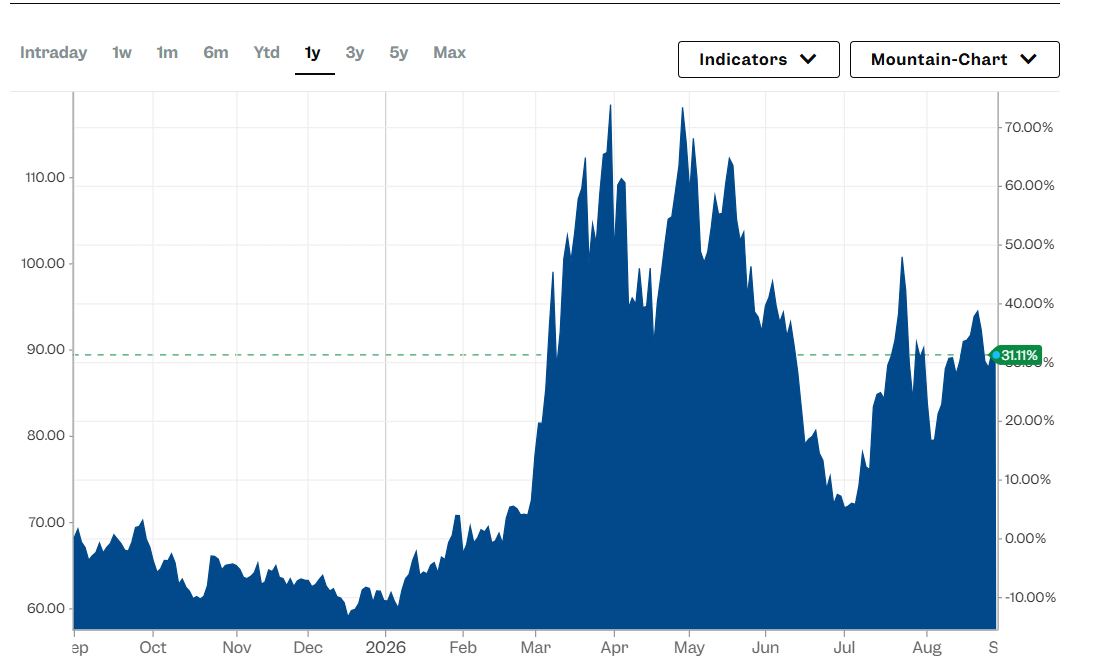
Brent crude oil prices recently surged by 2.5%, hitting $94.30 a barrel. That kind of jump at the pumps instantly reignites inflation anxieties across the board. In response, U.S. Treasury yields are climbing. When bond yields go up, borrowing gets expensive, and equities take the hit. We're already seeing significant sell-offs hammering major indices like the Dow Jones and the S&P 500.
Bottom line: This isn't an isolated border skirmish. It's a calculated strike in a rapidly expanding geopolitical chess match fuelled by terror financing and ideological proxy wars. With US brokers pushing a joint fusion mechanism to prevent an all-out war, the economic and security aftershocks are only just starting to hit home.
Comments ()