
Bank and Crypto Cyberattacks, November 2026: How Binance Was Hacked and How to Defend Your Business
How hackers stole $6.3B from Binance, what links the November 2026 bank attacks, who is suspected, and 10 steps your business can take now.
Key takeaways
- Binance lost roughly $6.3 to $6.4 billion on 29 October 2026. It is the largest crypto theft on record, about four times the $1.5 billion Bybit heist of February 2025.
- It was not a single phishing email. Binance says the attack was a multi-stage campaign: a tampered software installer in June, fake job interviews in September, and abuse of an internal AI tool in October. TRM Labs, Chainalysis and the FBI attribute it to North Korea’s TraderTraitor group.
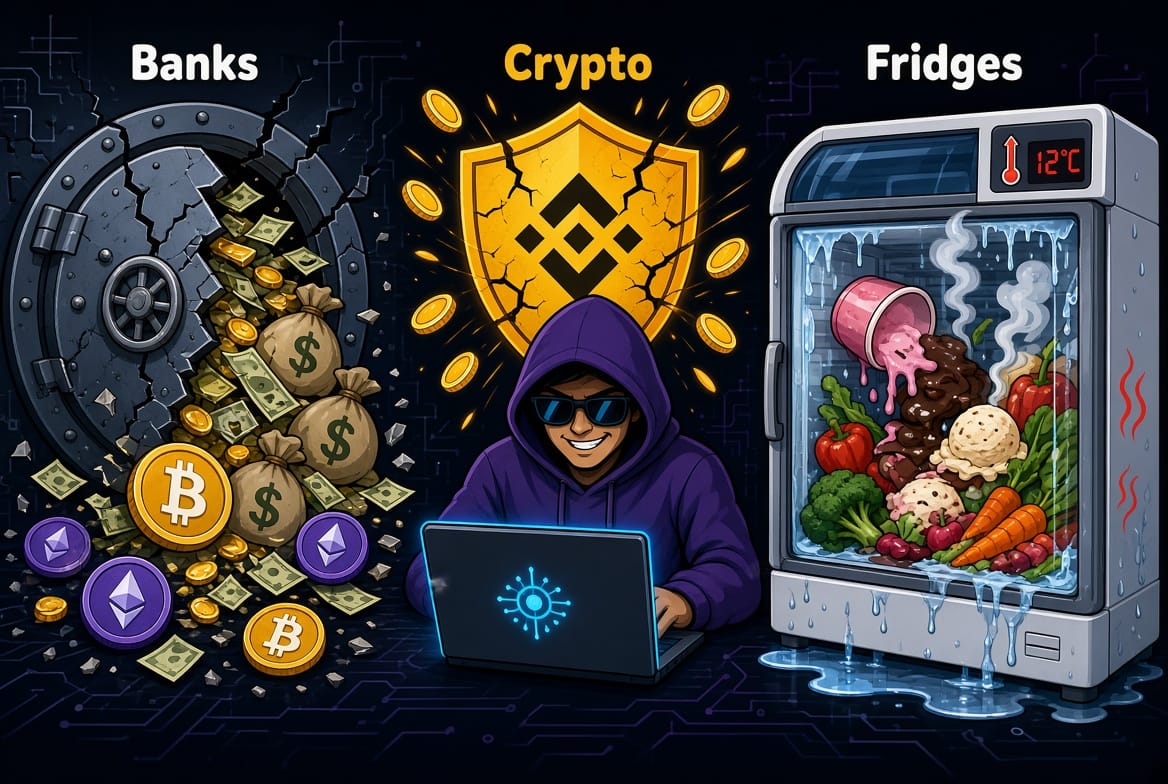
- Other recent incidents happened in the same weeks, but are not proven to be one campaign. A French bank, dozens of South Korean financial firms, Indian fintechs and European supermarket fridges were all hit. They share methods and weaknesses, not (so far) a common culprit.
- The shared weaknesses are human and organisational: trusted people and vendors as the way in, over-privileged accounts, attackers using AI, and crypto used to cash out within hours.
- The best defences are unglamorous: control what staff can install, remove standing credentials from laptops, separate the systems that can move money, and rehearse a freeze-and-recover plan before you need it.
The incidents at a glance
| Incident | When | What is confirmed | Who is suspected |
|---|---|---|---|
| Binance (crypto exchange) | 29 Oct 2026 | About $6.3–6.4B moved out of hot wallets on ten blockchains, most within roughly 20 minutes. About $2.7B frozen. Binance says it will cover user losses. | North Korea’s TraderTraitor (TRM Labs, Chainalysis, FBI) |
| Crédit Mutuel Arkéa (France) | Disclosed 2–4 Nov 2026 | Fraudulent transfers from the bank’s own account, reached through a service provider’s platform. On-chain investigator ZachXBT estimates over $133M (about €118M). The bank has not confirmed the amount and says customer money is unaffected. | Unknown. ZachXBT says it is not North Korea. |
| South Korean finance | 30 Sep to early Nov 2026 | 40 incidents at 37 firms, 470,000+ records leaked, about 1 billion won ($745,000) stolen from some firms’ own funds. | CrowdStrike: a suspected China-based, Chinese-speaking actor using AI tools, for the attacks it analysed |
| Indian banks, fintechs, crypto firms | Advisories 9 Oct and 4 Nov 2026 | CERT-In rates an AI-assisted campaign against payment APIs as critical. Some victims were hit again after fixing problems. | Tracked as ‘CRAFTY FALCON’. No named group. |
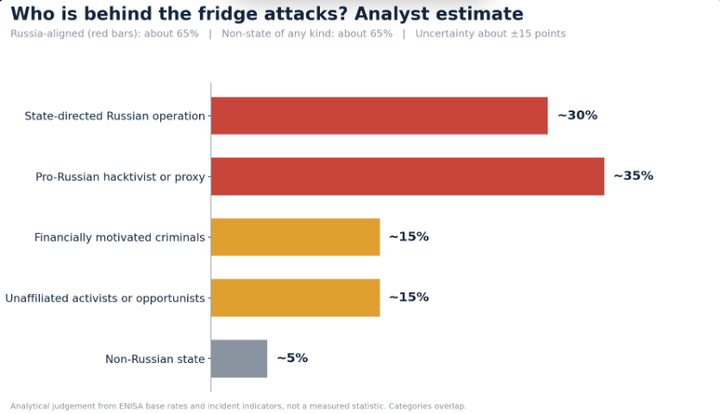
| European supermarket fridges | 11–12 Oct and 1–2 Nov 2026 | Hundreds of French stores, then 100+ more across several countries, had refrigeration controllers forced into defrost. | Two pro-Russian groups claimed it, then deleted their posts. Experts are sceptical. |
How Binance was hacked, step by step
Binance published an incident report on 3 November. Its findings are preliminary and an independent review is under way. Where it helps, TRM Labs’ analysis of the blockchain record fills in the rest.
- June 2026: a poisoned installer. An engineer on Binance’s wallet DevOps team searched online for a popular AI coding tool and installed a tampered version of Homebrew, a package manager widely used on Macs. Binance’s security team caught it, replaced his device and reset his credentials. But the attackers had already learned his role and the names of colleagues on the wallet team.
- September 2026: a fake recruiter. A different software engineer was contacted through a legitimate job-hunting platform by someone posing as a project director. His profile mentioned Binance. He had a video interview with a supposed HR representative, then a second interview with someone claiming to be the CEO of a fictitious company.
- The ‘assignment’ was malware. Near the end, he was told to download a coding exercise onto his work computer. It swapped a legitimate developer tool for a malicious copy. Binance says its endpoint protection did not detect it at the time. (Binance calls it a zero-day; at least one independent analyst publicly objected to that label.)
- 20 October: from one laptop to the wallet team. The attackers used that laptop and an internal Binance AI tool to take control of two more engineers: the DevOps engineer from June and a wallet software engineer. On the DevOps engineer’s computer they found a container deployment permission token, a credential that can launch software inside Binance’s infrastructure.
- 28–29 October: rehearsal. TRM saw small withdrawals from the Tornado Cash mixing service fund an attacker wallet from the morning of 28 October. The attacker then tested its code on other wallets and rehearsed the final version before installing it on a Binance hot wallet.
- 29 October: launch. Using the DevOps engineer’s stolen credentials, the attacker logged into the software engineer’s computer, deployed a container and ran a malicious script. Binance’s preliminary finding is unauthorised access to its internal wallet-signing service, the system that approves outgoing transactions.
- The Ethereum trick, in plain English. Ethereum has a feature called EIP-7702 that lets a normal wallet hand control to a smart contract by signing a permission slip. At 20:20 UTC, one transaction carried 50 such pre-signed permissions for a Binance hot wallet, pointing to a contract only the attacker could command. A wallet’s transaction counter keeps moving, and a permission only works at the right count. Preparing 50 in a row guaranteed one would be valid. About three and a half minutes later the attacker emptied the wallet: 167,464 ETH plus 63 other tokens, including about 1.6 billion USDT.
- Nine other blockchains, same half hour. Binance wallets on Bitcoin, Tron, XRP Ledger, Solana and others sent funds to the attacker through ordinary signed transfers, with no EIP-7702 trick. Different chains use different keys and signing schemes, so TRM concludes the most likely explanation is that the attacker could make Binance’s signing system sign transactions of its choosing. Binance says it found no evidence that private keys leaked.
- The race against the freezes. Tether, Circle, Ripple and World Liberty Financial froze about $2.67 billion in stablecoins, and Arbitrum’s Security Council froze about $30 million more. The attacker raced them by selling stablecoins to market makers at a discount of more than 10% and borrowing ETH against stablecoins. As of TRM’s 30 October snapshot it still held about $2.4 billion in assets no issuer can freeze.
- Clean-up. Binance removed the EIP-7702 delegation the next day, scanned all employee devices and brought in outside security firms. It resumed withdrawals in phases from 1 November and says it will cover all user losses.
What is still unknown: the final root cause, and exactly how the attacker obtained valid signatures on every chain. Binance’s co-founder Changpeng Zhao said publicly that a hack of this scale implies serious security failures.
What the attacks have in common
- A trusted person or vendor is the way in. Binance: fake recruiters and a poisoned installer. Arkéa: a service provider’s platform. South Korea: reports point to a loan-broker portal with weak authentication. European fridges: remote-maintenance controllers, many of them old equipment that no longer receives updates, according to Danfoss.
- AI is being used on offence. CrowdStrike reported that the South Korean attacker combined the open-source ARTEX pentesting tool with Anthropic’s Claude Code. CERT-In lists ARTEX, PentAGI, Cairn and CyberStrikeAI in the Indian campaign. At Binance, attackers abused an internal AI tool to pivot between employees.
- One over-privileged credential opens everything. A single deployment token and a single signing service were enough to reach wallets on ten blockchains.
- Crypto is the exit ramp. Stolen funds moved into stablecoins, swaps and exchanges within hours, in the Binance and Arkéa cases and in the Indian crypto-theft reports.
- Patience and persistence. Binance’s attackers worked for months. CERT-In says some Indian victims that had patched were deliberately targeted again after incomplete fixes.
Who is behind them? Evidence versus speculation
- Binance: high confidence. TRM Labs attributes it to TraderTraitor, North Korea’s elite hacking unit, citing on-chain and off-chain intelligence. Chainalysis also assesses it as likely, and the FBI later confirmed the attribution. The same group was named for the Bybit heist. Fake job offers are a long-running North Korean tactic, known as Operation Dream Job.
- Arkéa: unknown. ZachXBT says he is highly confident it is not Lazarus or North Korea. He has not published his evidence, and no other attribution has been established.
- South Korea: partial. CrowdStrike linked the attacks it analysed to one attacker-controlled IP address, and assessed with moderate confidence a Chinese-speaking, financially motivated actor. That does not prove one actor is behind all 40 incidents. Regulators warned that IP addresses do not show where attackers sit.
- India: unattributed. ‘CRAFTY FALCON’ is a tracking name given by India’s financial-sector CERT, not an identified group.
- Fridges: claimed, not confirmed. NoName057(16) and Z-Pentest Alliance, two pro-Russian groups, claimed responsibility on Telegram and then deleted the posts. Security researchers say they may be claiming credit opportunistically. The EU’s agriculture commissioner called the attacks a deliberate attempt to disrupt food supply.
What businesses can do
- Treat hiring and developer tools as an attack surface. Provide an approved software catalogue and block installs from unofficial sources. Ban coding ‘assignments’ from outside recruiters on work devices. Binance says it stopped 57 suspected North Korea-linked attempts in 2026, which shows how routine this approach has become.
- Get long-lived credentials off laptops. Use short-lived access, hardware security keys and separate admin machines for the few people who can touch money-moving systems.
- Separate the systems that move money. Split signing and approval paths by asset, chain and wallet tier, so one compromise cannot reach everything. Keep hot wallets small.
- Require independent approval for large or unusual payments. Use multiple approvers, out-of-band confirmation, velocity limits and alerts for tiny ‘test’ transfers, which precede larger fraud.
- Watch for the specific tricks. Crypto treasuries should alert on any EIP-7702 delegation on a treasury wallet, reject unexpected authorisations and treat a burst of authorisations across many transaction counts as a compromise signal. Keep a tested method ready to revoke.
- Treat internal AI tools as privileged systems. Give them least-privilege access, log what they do, and require human approval for consequential actions. CERT-In’s new AI auditing guidelines say much the same.
- Audit vendors and your internet-facing footprint. Limit what a vendor platform can do with your accounts, set transaction limits, and inventory every system exposed to the internet. Korea’s regulator has ordered exactly this review.
- Take operational technology off the open internet. For connected equipment such as refrigeration controllers, replace unsupported units, update firmware, and disconnect or filter remote access, as French CERT and Danfoss advise.
- Prepare a freeze-and-recover playbook. Binance’s stablecoin freezes recovered roughly $2.7 billion within hours because issuers acted quickly. Pre-arrange contacts with exchanges and issuers, and rehearse the response.
- Assume you will be hit again. Keep monitoring after you patch, and run tabletop exercises for the off-hours windows when attackers prefer to strike.
Frequently asked questions
How much did the Binance hack steal?
TRM Labs puts it at about $6.36 billion across ten blockchains. Binance’s own figures are around $6.3 to $6.4 billion, depending on timing and pricing. It is the largest crypto theft on record.
Who hacked Binance?
TRM Labs and Chainalysis attribute it to North Korea’s TraderTraitor group, and the FBI has since confirmed that attribution.
Did Binance customers lose money?
Binance says it will cover all user losses from company reserves. It resumed withdrawals in phases from 1 November.
What is a hot wallet?
A hot wallet is an internet-connected crypto wallet that an exchange uses to process customer withdrawals. It is convenient but exposed, which is why experts advise keeping balances small.
Are the bank attacks connected?
Not according to public evidence. The Binance attack is attributed to North Korea, Arkéa’s attackers are unidentified, the Korean campaign is linked to a suspected China-based actor, and the fridge attacks remain unattributed.
Is my own bank account at risk?
In the Arkéa and South Korean cases, banks say customer money was not taken, but leaked personal data raises phishing risk. Arkéa warned customers to expect scam attempts. Be wary of unexpected calls or messages that quote personal details.
How do I protect my company from fake recruiter attacks?
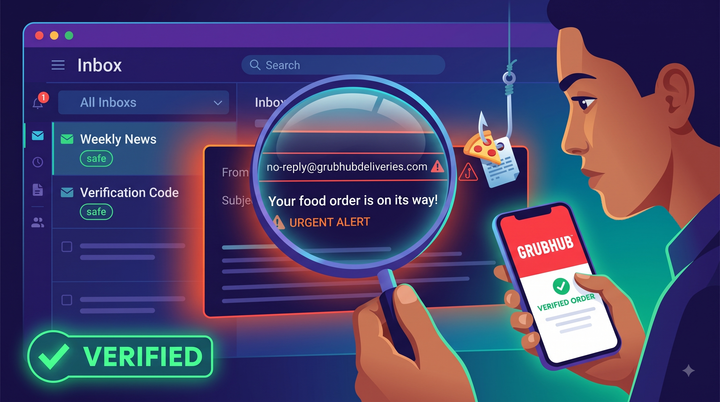
Never run code from an outside ‘assessment’ on a work device, install software only from approved sources, and train technical staff on recruiter-themed lures.
What we could not verify
- The final cause and full scope of the Binance breach, which Binance says is still under investigation.
- Arkéa’s exact loss, the name of its service provider, and the attackers’ identity.
- Any link between the SBI customer-record leak (3,897 records with personal data, disclosed 21 October) and CRAFTY FALCON.
- Who truly carried out the fridge attacks.
Comments ()