
Two Weeks After the Invasion of Ceuta: Shanty Towns and Sexual Assaults
Two weeks after the mass surge into Ceuta, the beaches tell the story of what remains. On Playa del Trampolín, a once-ordinary cove has become a sprawling shanty town of reed, cardboard and plastic huts where roughly 1,500 migrants sleep under the open sky.
Two weeks after the late-July 2026 mass crossing that saw an estimated 60,000–72,000 people surge from Morocco into the Spanish exclave of Ceuta, the acute “invasion” phase has largely receded. What remains is a grinding humanitarian and security crisis visible on the city’s beaches and in its overwhelmed systems: expanding shanty settlements and a cluster of reported sexual assaults, many involving vulnerable migrant minors.
The Shanty Towns on the Beaches
The most visible symbol is Playa del Trampolín (Trampoline Beach), a narrow ~140-meter cove that has been transformed into an open-air camp. With the Temporary Immigrant Shelter (CETI) far beyond capacity, roughly 1,500 migrants (some local estimates higher) — predominantly sub-Saharan Africans, including groups of Sudanese, plus Moroccans, Algerians, Yemenis and others — have built makeshift shanties from reeds, branches, cardboard, plastic sheeting and scavenged cloth.
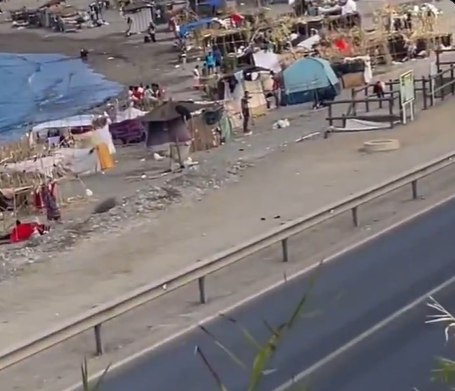
What began as a handful of temporary shelters (around 15–20 in early August) has grown to more than 80 structures by mid-August. Some house only a few people; others sleep 10–15. Belongings pile up around them. Red Cross distributes meals (around 2,000 rations daily at times), and authorities have installed temporary showers and toilets, but conditions remain harsh: extreme heat by day, cold nights, limited sanitation, and accumulating waste. Some Sudanese groups have organized cleaning efforts, calling the beach “our house” that must be looked after.
Local and Spanish media describe the scene as a “poblado de chabolas” (shanty village). Residents and visitors report the beach is effectively inaccessible for normal use, with clothes, food waste and human waste scattered. Similar informal camps have appeared on cliffs and other coastal spots, some dangerously close to precipices.
Sexual Assaults and Vulnerable Minors
Alongside the camps, Spanish authorities and health workers have documented multiple sexual assaults linked to the post-surge overcrowding and street vulnerability. The majority of reported victims and alleged perpetrators appear to be other migrants.
Key confirmed or reported figures (as of mid-August reporting):
- At least six formal sexual-aggression complaints under judicial investigation (some involving penetration; victims include at least two minor girls).
- Ceuta University Hospital treated at least four to five girls under 14 for injuries or signs consistent with rape or attempted rape; additional cases (including one boy) and broader sexual-assault presentations bring the number of hospital-compatible incidents higher. Some media and police-union claims referenced around ten cases involving minors.
- Formal court complaints reached around a dozen in some later tallies. Police have escorted groups of women and girls for protection in certain areas. No large number of arrests had been publicly detailed in early reporting.
Personal and professional testimonies:
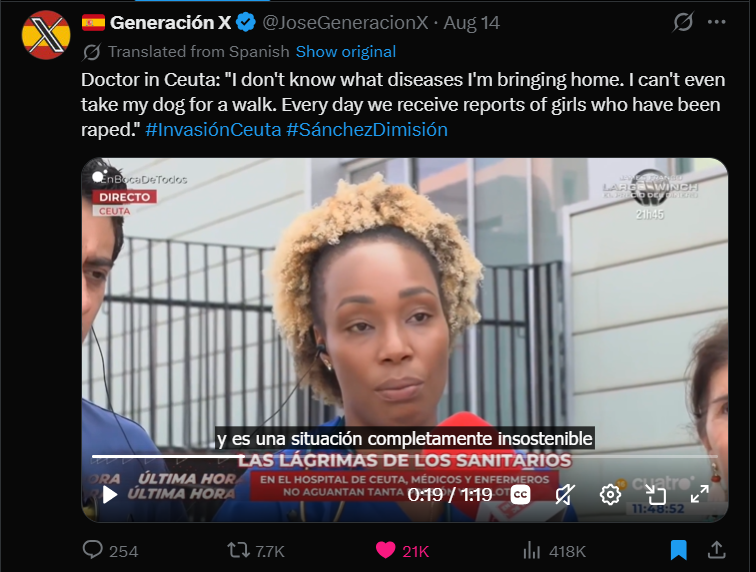
- Emergency doctor Susana Ascaso (Hospital Universitario de Ceuta) stated publicly that the service was treating “niñas violadas” (raped girls) under 14 who were living on the street because minors’ centres had no space. She described the overall situation as a health catastrophe. (Covered in El Pueblo de Ceuta, Euronews and others:
- A local woman interviewed by laSexta said three migrant girls who arrived by swimming told her they had suffered attempted rape; one approached her in Arabic pleading for help because men were harassing her. Neighbours took some girls into temporary protection.
- Neighbourhood association leaders (e.g., Abdelah Mustafa of Sidi Embarek / La Reina area) reported girls arriving in shock after assaults in the hills or streets and said they organised emergency shelter for hundreds of women and minors precisely because of the vulnerability. One young woman, Wiam (23), who fled Morocco after alleged abuse by her father, described living on a football pitch with other women: “My father wanted to abuse me… He threatened to kill me if I returned.”
- A 62-year-old Ceuta resident, Beatriz, publicly described waking to find an unknown migrant man in her bed (in underwear); she framed it as an invasion of her home and a sexual-aggression scare, noting some dismissed her age.
Spanish Military Response and Armoured/Tracked Vehicles
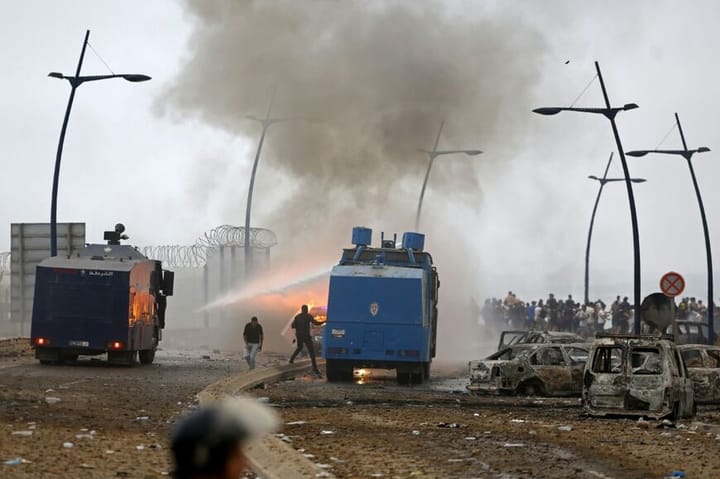
Spain rapidly deployed additional National Police, Civil Guard, and military units (including Spanish Legion / La Legión, Regulares, and Cavalry elements already based in Ceuta, plus reinforcements from the mainland). Total military presence in the city exceeded 2,000–2,500. Troops conducted patrols, directed returns, swept beaches/hills for remaining migrants, and secured the border. Armored vehicles were prominently used for deterrence and mobility.
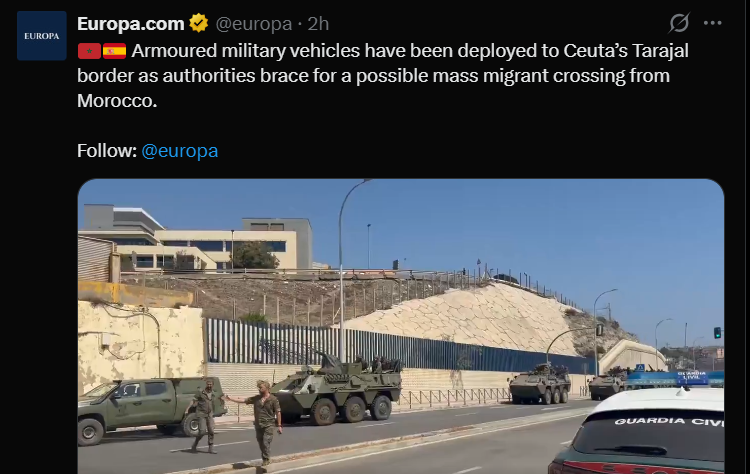
Reports and footage showed Legion armored vehicles (vehículos blindados) patrolling streets and areas after the surge. Ceuta’s permanent forces include Leopard 2A4 main battle tanks (with the Regimiento de Caballería “Montesa” nº 3) and other armored/mechanized assets (e.g., BMR vehicles with Legion units, VAMTAC tactical vehicles). Soldiers were observed positioned near or with tanks/armored vehicles during the response; armored patrols continued afterward as the situation stabilized but remained tense.
A floating maritime barrier was also installed.
Broader Context Two Weeks On
Thousands remain in Ceuta (local estimates often higher than central-government figures), including over a thousand unaccompanied minors who cannot be returned easily. Armoured and military patrols continue. A floating barrier was installed at key sea points. Political pressure is intense: local PP leadership has called the original surge an attack on sovereignty (with possible Moroccan facilitation), while the national government emphasises trafficking networks, cooperation on returns, and restoration of normality. EU partners remain divided.
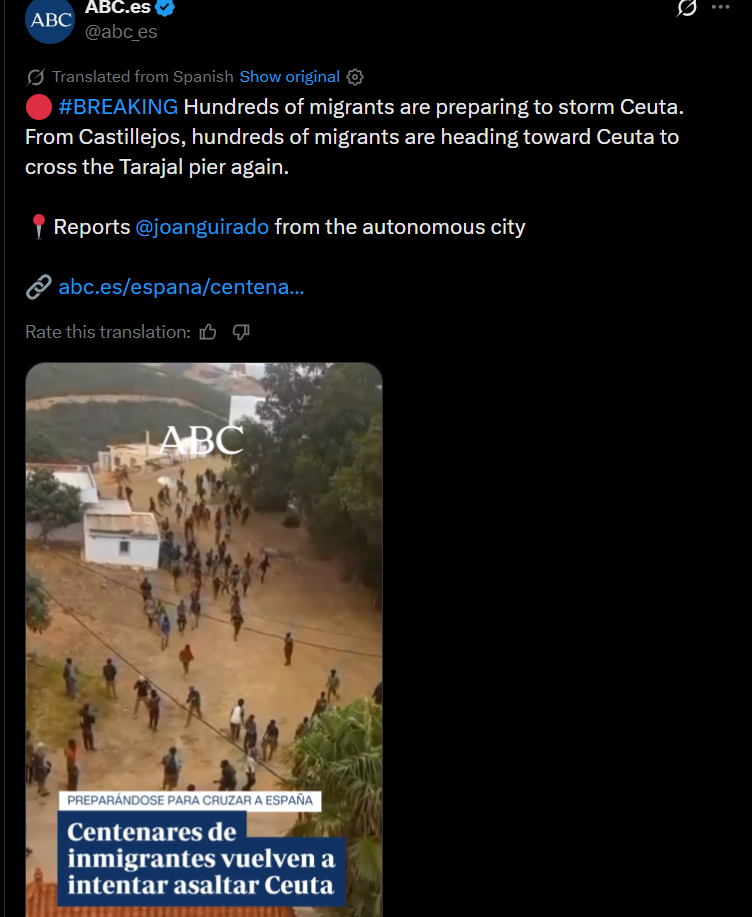
The shanty settlements and the documented assaults on the most vulnerable illustrate what happens when a sudden, massive irregular entry overwhelms a small territory’s capacity. Hygiene, public order, child protection and sexual-violence investigations remain active priorities as the residual population endures and new social-media calls for further crossings occasionally surface.
Situation remains fluid as of 15 August 2026.

Comments ()