The IRGC Proxy Network and the Domestic Squeeze on Ireland
A security intelligence briefing detailing IRGC-linked kinetic operations against Jewish infrastructure in the UK and the arrest profile of radical financier Fergus Chambers.
The operational reach of the Islamic Revolutionary Guard Corps (IRGC) and its proxy networks across the UK and the Republic of Ireland is no longer a distant theoretical threat; it is an active, escalating security crisis. With the UK sanctioning the Islamic Movement of Companions of the Right (IMCR) and the EU formally designating the IRGC as a terrorist organisation on 19 February 2026, the spotlight is firmly on Ireland. Our domestic vulnerabilities—from diplomatic cover and narcotrafficking to political facilitation and "Grey Zone" tactics—are now critically exposed.
1. The UK Target Matrix and the Overspill
The UK Foreign Office's recent sanctions against the IMCR lay bare the IRGC's Quds Force strategy: using proxy networks to execute attacks right on European soil. The physical threat to Jewish infrastructure and independent media isn't just talk; it's an active, state-backed campaign.
The UK Reality Check: British intelligence has flagged dozens of IRGC-backed assassination and kidnap plots on UK soil since 2022. We’ve seen targeted harassment and operational plotting against journalists at Iran International in London, forcing them to temporarily relocate to the US, and the stabbing of Iranian journalist Pouria Zeraati outside his London home in early 2024. Intelligence reports have also documented recent attacks on Jewish ambulances in London—soft targets hit by proxy networks aiming for maximum psychological disruption.
The Irish Knock-On Effect: UK security decisions dictate our operational environment. When the British security apparatus tightens the net, hostile state actors and proxy groups frequently route their logistics through the Republic of Ireland, exploiting our weaker intelligence and counter-terrorism framework. Take Palestine Action, for example: as the UK formally proscribes them as a terrorist organisation, their Irish-based cells are placed under heightened surveillance for potential "black-bag" funding linked to IRGC-backed entities.
2. Diplomatic Cover and Intimidation in Dublin
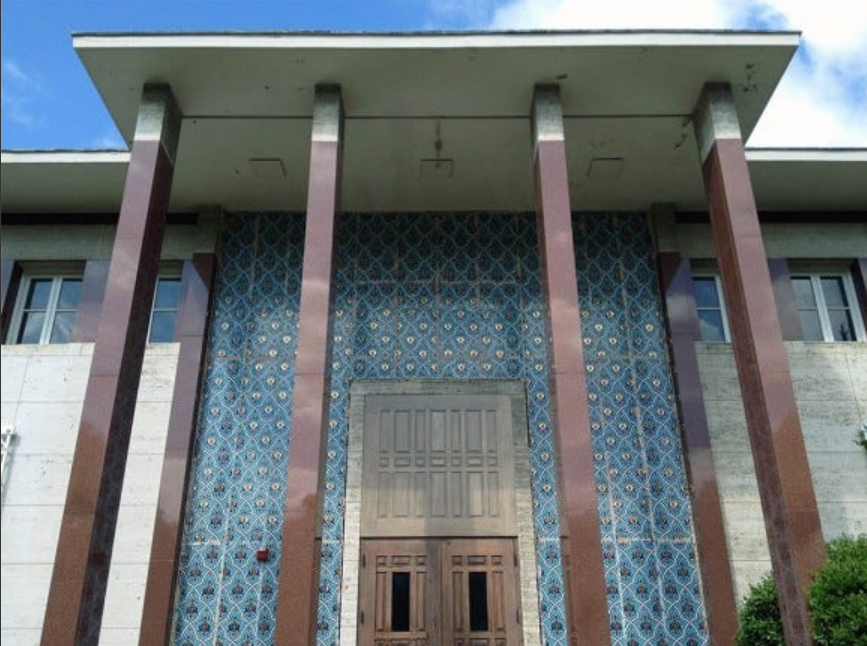
The most immediate domestic threat is the campaign of intimidation levelled against the Iranian community right here in Ireland. Hostile state actors routinely use diplomatic missions as operational bases. The Iranian Embassy in Dublin serves as a likely logistical hub for Ministry of Intelligence (MOI) and IRGC operatives operating in the State.
- Surveillance Operations: Anti-regime activists in Dublin are reporting being followed and photographed by individuals allegedly tied to the IRGC or the MOI.
- Coercion by Proxy: Intelligence indicates a surge in digital intimidation, where the IRGC uses the physical safety of relatives back in Iran as leverage to silence dissidents living in the EU. Operating out of diplomatic facilities gives these agents legal immunity while they keep tabs on Irish residents.
3. The Narco-Terrorism Pipeline: Kinahan and the IRGC
The IRGC funds its external operations through a "drugs-for-influence" model, posing a massive physical security threat to the State. This operates at the highest levels of transnational organised crime.
Iranian state agent Naji Sharifi Zindashti currently coordinates directly with the Kinahan Organised Crime Group (KOCG). The IRGC provides logistical protection for cocaine shipments originating in South America that transit through Iranian-controlled hubs. These narcotics are then distributed throughout Ireland and the UK by the KOCG. By protecting the Kinahan supply chain, the Iranian state is directly funding the gangland violence that destabilises our communities and enriching domestic drug cartels.
4. Domestic Facilitation and the "Axis of Resistance"
The IRGC, Hezbollah, and Hamas form the core of the "Axis of Resistance". The IRGC’s Quds Force provides the overarching strategic guidance, weaponry, and military training for these groups. In Ireland, the risk manifests primarily through ideological alignment and "soft power" facilitation by domestic political actors.
- Political Legitimacy: Members of the Irish far-left, including People Before Profit (PBP) and the Social Democrats, frequently share platforms with individuals expressing open support for the "resistance" tactics of Hamas and Hezbollah. Their rhetoric often mirrors IRGC propaganda, categorising sanctioned terrorist groups as legitimate "national liberation" movements.
- Sinn Féin's Posture: Senior Sinn Féin members, including Mary Lou McDonald, have faced intense political scrutiny for their refusal to unconditionally condemn Iranian state actions. In March 2026, the Taoiseach accused the party of offering a defence and rationale for Iranian regional aggression.
- The "Grey Zone" Vulnerability: The IRGC utilizes Western "anti-imperialist" voices to amplify its narratives. Comedian Tadhg Hickey, for instance, visited Tehran in 2024 for a film festival sponsored by the Islamic Republic of Iran Broadcasting (IRIB), participating in state-sponsored workshops that serve to sanitize designated terrorist groups like Hezbollah for an Irish audience. Furthermore, significant concerns exist regarding public money being allocated to entities managed by individuals promoting IRGC-aligned narratives, such as Daniel Lambert, manager of Kneecap.
5. The Radical Funding Network: Fergus Chambers
The radicalisation of domestic protest movements relies heavily on transnational financial pipelines. A primary vector here is Fergus (Fergie) Chambers, an American Marxist and highly visible financier of militant, direct-action groups.
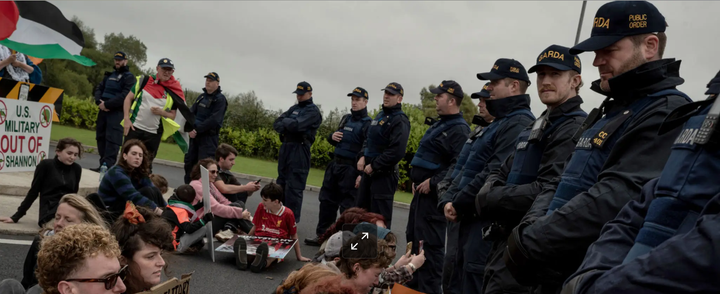
Chambers has used his massive inherited wealth to fund extreme fringe networks that bypass traditional political advocacy in favour of physical sabotage. His primary beneficiary has been Palestine Action. Chambers was arrested following his extensive, public financial backing and logistical support for cells executing illegal property destruction, trespassing, and the physical blockade of defence and technology infrastructure.
The financial and operational footprint of Chambers is a direct concern for the Republic. With Palestine Action’s Irish-based cells under heightened surveillance, the arrest of their primary international financier indicates a tightening global dragnet around the dark money sustaining domestic radicalisation.
6. EU Regulatory Compliance: The Financial Bottom Line
Following the EU's designation of the IRGC as a terrorist organisation in February 2026, the Republic of Ireland is legally obligated to act.
The State must immediately freeze all IRGC-linked assets. Failure to transpose Directive (EU) 2024/1226 puts the State at risk of severe EU infringement proceedings. For corporate entities operating in Ireland, the financial risk is massive: companies negligent of IRGC links face fines up to 5% of global turnover or €40 million. Furthermore, any individual or organisation in Ireland providing funds or "economic resources" to Hamas or the Palestinian Islamic Jihad faces a fine of up to €500,000 and 3 years imprisonment.
The Strategic and Economic Reality for Ireland
The operational expansion of IRGC proxy networks and their radical financial pipelines is a direct and immediate threat to the Republic of Ireland.
The Impact on Public Safety: The spillover of Iranian state operations actively degrades Irish public safety. The IRGC's "drugs-for-influence" model directly empowers the KOCG, funding gangland violence. The importation of radical "direct action" tactics normalises street-level militancy. The active transnational repression of the Iranian diaspora in Dublin proves hostile intelligence agencies are operating with alarming impunity on our soil.
The Impact on Business and FDI:
For enterprise operators and corporate boards, the risk profile has shifted to severe legal and physical liability:
- Regulatory Annihilation: With the EU’s formal listing of the IRGC as a terrorist organisation, Ireland must freeze all associated assets. Companies negligent of maintaining IRGC-linked supply chains face catastrophic EU regulatory fines.
- Physical Infrastructure Threats: Groups like Palestine Action target defence and technology infrastructure, posing an active physical threat to corporate operations. Facilities housing data, logistics, and multi-national enterprise operations are primary targets for direct-action sabotage.
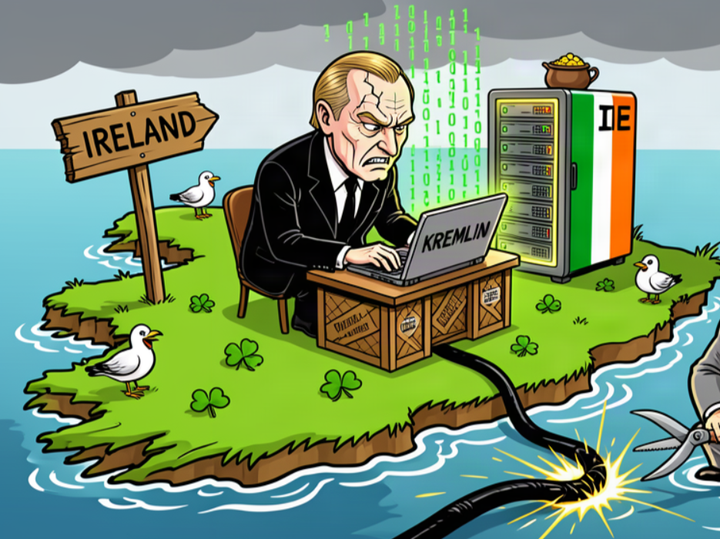
- Kinetic Disruption: Security services are tracking a shift toward kinetic risks, investigating drones spotted over Dublin Airport. The "worst-case scenario" involves IRGC-linked vessels deploying sabotage systems off the Irish coast, threatening transatlantic data cables and maritime logistics.
Ireland can no longer rely on geographic isolation or perceived neutrality as a security buffer. The infiltration of IRGC influence requires an immediate, total reassessment of corporate compliance, physical asset protection, and national intelligence capabilities.
Comments ()