
Ceuta Crisis: Europe has been invaded
A massive failure of border control has hit the Spanish enclave of Ceuta, with an estimated 60,000 people breaching the frontier in just two days.
Alright, you want the facts straight up, no messing about. Here is the accurate, current rundown of the Ceuta border crisis as of today, July 31, 2026.
The Border Breach (July 30-31, 2026)
La situación que estamos viviendo aquí es MUY TENSA.
— Salva Ortega (@_SalvaOrtega) July 31, 2026
Están las calles a rebosar, según los medios ya llevamos más de 50.000 inmigrantes que han entrado por la frontera.
Están empezando a saquear supermercados y Ceuta está confinada entera
Nos han invadido y no podemos más. https://t.co/dgdj3AiAAS pic.twitter.com/HYpdijGzww
This isn't a small incident; it's a massive failure of border control. Over the last 48 hours, an estimated 60,000 people have crossed from Morocco into the Spanish enclave of Ceuta.
- The Method: People didn't just walk through gates. The vast majority bypassed checkpoints entirely by swimming around the Tarajal and Benzú breakwaters or wading through the water along the coastline.
- The Scale: To put this in perspective, 60,000 arrivals is equal to more than two-thirds of Ceuta's normal population of 80,000.
- The Casualties: This isn't just numbers; it's lethal. The official death toll is currently at least 34 to 43 people, primarily from drowning or crush injuries at the border.
The Root Causes and Triggers
The sudden surge wasn't random. It's a combination of legal loopholes, human trafficking, and severe geopolitical tension between Spain, Morocco, and Algeria.
- The Legal Loophole: A recent Spanish Supreme Court ruling determined that migrants intercepted at sea while trying to reach Ceuta cannot be subjected to "summary return" (immediate expulsion). Smugglers and human traffickers weaponised this ruling, spreading rumours that the border was effectively open if you arrived by water.
- The Geopolitical Angle: This is crucial. Spanish Prime Minister Pedro Sánchez visited Algeria (Morocco's bitter regional rival) on July 20, 2026. Analysts and officials strongly suspect that Morocco deliberately relaxed its border controls in retaliation, using migration as a weapon to punish Spain for warming ties with Algiers.
The Moroccan Police Response
La policía marroquí vacía camiones enteros cargados con varones en edad militar para que asalten la frontera española. Todo está organizado y planificado. pic.twitter.com/GxX5aw5wM1
— Sr.Liberal (@SrLiberal) July 30, 2026
The response from Moroccan authorities has been highly questionable and adds weight to the theory of deliberate retaliation.
- Initial Passivity: During the peak of the crossings, there were widespread reports that Moroccan security forces essentially stood down, allowing thousands to pass through monitored areas completely unhindered.
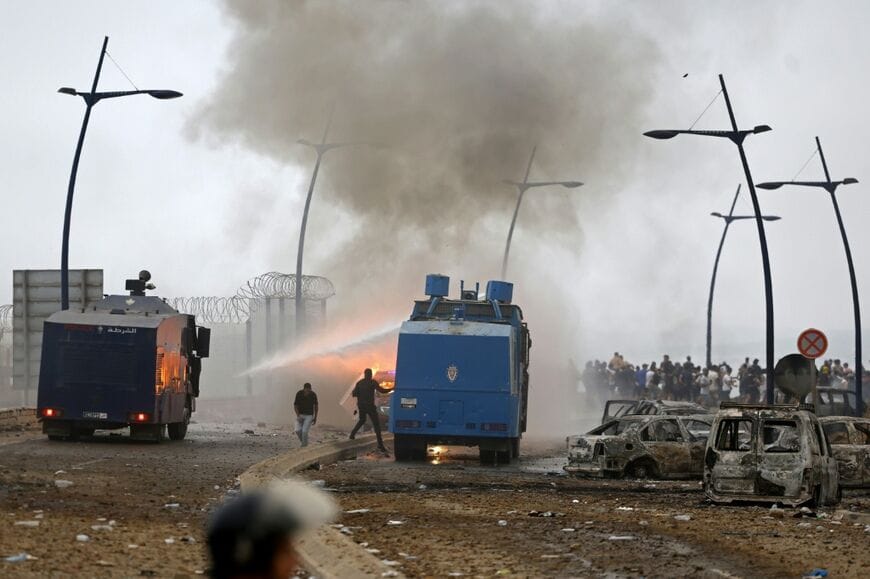
- The Pivot to Violence: Once the situation reached critical mass, Moroccan riot police pivoted aggressively, deploying tear gas and water cannons to violently disperse crowds near the border.
King Mohammed VI's Pardon (July 29, 2026)
- On July 29, 2026, King Mohammed VI granted a royal pardon to 1,788 people for Throne Day.
- However, 1,668 of these were sentence reductions, not outright releases. Only 9 prisoners were pardoned for the remainder of their terms.
- This is a routine, annual tradition in Morocco. There is zero evidence linking the release of 9 prisoners to a border surge of 60,000 people.
🚨 🇪🇸 Migrant thirsty for blood.
— TheEnglishPatriot (@TheEnglishPat) July 30, 2026
I will always stand up for my country, my family, and my friends. No matter the personal cost, I will do everything I can lawfully, courageously, and with unwavering determination to help protect the people and values that matter most to me. pic.twitter.com/TDrswh2lda
International Reactions
The fallout is tearing through European politics.
Spain:
- Prime Minister Pedro Sánchez called it "a violation of Spain's territorial integrity".
- The Spanish government has deployed the army to back up the border police and is attempting to physically secure the enclave.
- They are pushing hard for returns; as of today, they claim roughly 37,500 people have been sent back to Morocco.
The European Union (The Fallout):
- This is threatening the core of the EU's open borders. Right-wing politicians across Europe are blaming Spain's earlier policies of legalising undocumented migrants.
- Italy: Prime Minister Giorgia Meloni's government has publicly threatened to push for Spain's suspension from the Schengen free-movement zone. Such calls backed by Denmark and Czech Republic.
- France: In response to the chaos, France has tightened its own borders with Spain to prevent secondary migration.
Ceuta. pic.twitter.com/syp8tg9Qk6
— Dominik Tarczyński MEP (@D_Tarczynski) July 30, 2026
CONCLUSION: STRATEGIC IMPLICATIONS FOR EUROPE AND IRELAND
This event is not merely a border skirmish; it is a profound stress test of the European security architecture. The Ceuta breach demonstrates the acute vulnerability of the EU's external borders to hybrid tactics and sudden mass migrations.
For Ireland, the implications are indirect but deeply concerning. While geographically insulated from the immediate Mediterranean flow, Ireland's security is inextricably linked to the stability of the EU. A collapse or suspension of the Schengen agreement would drastically alter the political and economic landscape of the continent.
Sigo informado de lo que está ocurriendo en Ceuta, ciudadanos me pasan vídeos de cómo algunos de los que han pasado la frontera están empezando a romper ventanas y ocupar casas.
— Salva Ortega (@_SalvaOrtega) July 30, 2026
No es ningún bulo, lo que está ocurriendo en Ceuta es MUY GRAVE.
Necesitamos el apoyo del pueblo. pic.twitter.com/Op4oBQs5fl
Furthermore, if the EU's external borders remain porous, the secondary movement of migrants inevitably increases the pressure on all member states, including Ireland, straining domestic reception capacities and internal security resources. The Ceuta crisis is a stark warning: border security in the modern era requires constant vigilance against rapid, asymmetrical surges.
Comments ()